
How does the DSM-5 relate to these philosophical texts?
To understand why the DSM-5 (the standard clinical manual used by psychiatrists to diagnose mental disorders) is placed alongside esoteric, religious, and philosophical works, it is helpful to look at the list’s title and its overarching theme of the mind.
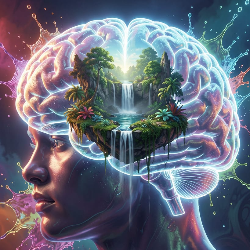
The collection serves as a curation of different frameworks for understanding human consciousness, suffering, and mental transformation.
- The philosophical and spiritual texts—such as Dark Night of the Soul, the Tao Te Ching, the Tibetan Book of the Dead, and JungianCarl Jung and Sigmund Freud made significant contributions to the field of psychology, however their theories and approaches differed in More psychology—offer mystical, moral, and metaphysical lenses for interpreting deep psychological experiences and the evolution of the soul.
- The DSM-5 represents the modern, empirical, and medical lens. It categorizes abnormal psychological experiences through a strictly clinical framework.
Grouping them together under the title “Mental Way (Weigh) Stations” demonstrates both clinical psychiatry and ancient spiritual philosophies are paradigms (or “stations”) for navigating and understanding the human mind. It contrasts the scientific path of defining mental states with the spiritual path of transcending them.
Course: The 27 Mental Way-Weigh Stations