The 27 Mental Way-Weigh Stations
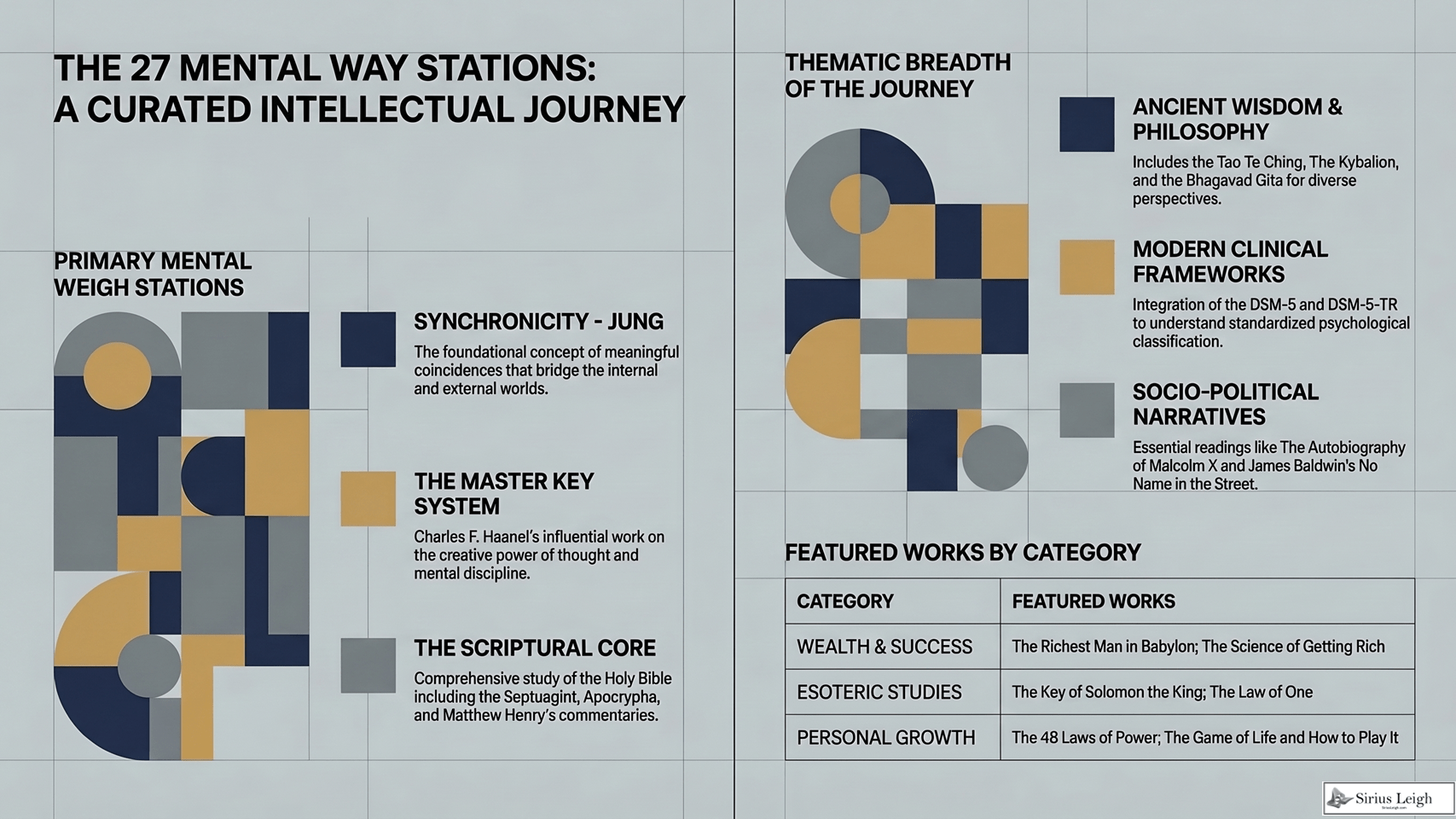
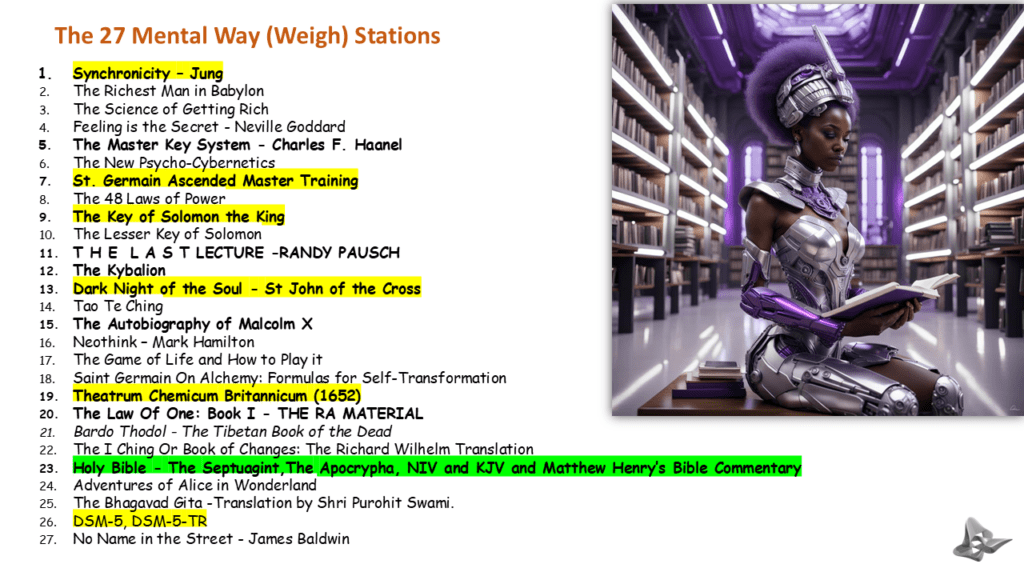
The 27 “Mental Way (Weigh) Stations” acted as an intellectual and spiritual crucible that directly shaped the core architecture of Mathematical Phenomenology and Hermeneutics (MPH). By providing a space to weigh beliefs and map the psyche, these texts shifted the author’s understanding of God, math, and inner fusion, ultimately bridging the gap between logic and intuition.
While they were deeply important to my own journey, they are not presented as a required path for everyone. They reflect the particular terrain I had to cross: a convergence of grief, mathematics, philosophy, spirituality, and the search for my own center of growth.
Here is an analysis of how these specific texts influenced the development of the MPH framework:
The “God⇌Math” Synergy and Math as a Living Verb MPH explicitly rejects “CAP Math” (Consistency, Accuracy, and Predictability) which treats mathematics as a cold, industrial procedure, and instead reframes mathematics as a “kinetic performance of being” and a living language for the soul.
Broadly, the common theme uniting this eclectic list is the pursuit of self-mastery, spiritual transformation, and understanding the human mind and reality. The list encompasses a wide spectrum of human thought that can be broken down into a few interconnected sub-themes:
- New Thought, Wealth, and Self-Help: Books like The Science of Getting Rich, The Richest Man in Babylon, The Master Key System, and Feeling is the Secret focus on using the power of the mind and belief to manifest success, alter reality, and achieve personal empowerment.
- Esoteric, Mystical, and Alchemical Traditions: Texts such as The Kybalion, The Key of Solomon, St. Germain Ascended Master Training, and Theatrum Chemicum Britannicum deal with hidden knowledge, Hermeticism, and spiritual alchemy (the transformation of the soul).
- Eastern Philosophy and World Religions: Foundational spiritual texts like the Tao Te Ching, The Bhagavad Gita, The I Ching, the Bardo Thodol (Tibetan Book of the Dead), and the Holy Bible offer ancient frameworks for spiritual salvation, morality, and understanding the nature of the universe.
- Psychology and the Mind: Works like Carl Jung’s Synchronicity, The New Psycho-Cybernetics, and the DSM-5 (the standard classification of mental disorders) approach the human mind from clinical, psychoanalytical, and behavioral perspectives.
- Life Philosophy and Identity: Autobiographical, strategic, and philosophical works like The Autobiography of Malcolm X, The Last Lecture, The 48 Laws of Power, and James Baldwin’s No Name in the Street provide practical, lived lessons on power, identity, resilience, and personal evolution.
Ultimately, these diverse texts collectively serve as “mental stations” where an individual can explore different philosophies, ranging from the highly mystical to the strictly clinical on the journey toward understanding consciousness and mastering themselves.
Reader’s Note:
There are many valid roads to self-transformation, and few of them require swimming through alchemy, ancient texts, psychology, or metaphysical philosophy.
This Exploration Material is offered for those who are naturally drawn to the esoteric, who enjoy tracing deeper symbolic architecture, or who simply want to understand the intellectual and spiritual foundation beneath Mathematical Phenomenology and Hermeneutics.
These are just a few points on the map of my mind.
Course Outline
- What is the common theme among these 27 stations? Free
- How does James Baldwin's work fit into this mental journey? Free
- How do the different Bible translations serve as a 'station'? Free
- How do the 48 Laws of Power fit this theme? Free
- How do wealth-building books fit this spiritual list? Free
- How does the DSM-5 relate to these philosophical texts? Free
- How does Alice in Wonderland fit into these mental stations? Free
- Vocabulary Primer Locked
- Way–Weigh System for Professional Sovereignty Locked