Reductionism: Clarifying the Complex Through the Essential
Reductionism, in its broadest sense, is the philosophical and methodological approach of understanding complex phenomena by reducing them to their most basic constituent parts. It is a lens through which science, psychology, and philosophy often operate, seeking clarity not in the chaos of the whole, but in the structure of its elements.
At its core, reductionism operates under the belief that a system is best understood by examining its simplest components. In the physical sciences, this manifests in the breakdown of matter into atoms, then subatomic particles. In psychology or behavioral studies, it may involve analyzing human behavior in terms of neural activity, evolutionary impulse, or biochemical interactions.
The Strengths of Reductionism
One of the main strengths of reductionism lies in its precision. By isolating variables and focusing on core elements, researchers and theorists can develop models that are testable, measurable, and replicable. It offers a structured framework that cuts through ambiguity. A tool especially powerful in a world increasingly saturated with data and competing narratives.
In science, reductionism has yielded monumental progress. Medicine has advanced by studying specific pathogens or genes rather than vague descriptions of illness. Physics has unveiled the structure of the universe by analyzing particles invisible to the naked eye. Even in artificial intelligence, systems improve not by absorbing “life as a whole” but by iteratively refining discrete, trackable inputs.
Criticism: The Danger of Oversimplification
Yet, reductionism is not without critique. Chief among these is the argument that it oversimplifies: that it flattens the richness of human experience and ignores the interwoven layers of meaning and context. Critics argue that complex human behaviors cannot be fully explained by biology alone, or by any single lens of analysis. They emphasize the importance of holistic and interdisciplinary models that respect the interaction between psychological, social, cultural, and biological dimensions.
In particular, reductionism is seen as deficient when it overlooks the interaction between different levels of explanation, such as how societal structures influence personal behavior, or how consciousness arises from the neural substrate. Critics fear that, in distilling a human into a list of mechanisms, we risk dehumanizing them altogether.
A Rebuttal: When Oversimplification is a Strength
However, for my purposes, what is often perceived as the flaw of reductionism is, in fact, its virtue.
I engage with reductionism not to erase the complexity of human life, but to hold it at bay, if only for a moment, so that I may glimpse the architecture beneath it. The simplification it demands is not an insult to complexity, but a deliberate abstraction meant to clarify rather than distort.
I seek, through reductionism, to separate the complex from the real – a mathematical pun, perhaps, but one grounded in the belief that the raw form of human behavior is too often buried beneath interpretation, ideology, and aspiration. There is value in looking at our nature not as we hope it to be, but as it is when stripped of adornment. This is not cynicismCynicism is emotionally toxic and cynics are tainted hypodermics administering the toxicity. Interaction in the real world will create a More; it is honesty.
Indeed, only those who see the human condition as inherently shameful resist its raw portrayal. But to study humanity in its unvarnished form is not to condemn it. It is to recognize its starting point. Only then, only after we understand what is, can we meaningfully explore what might be. From this foundational clarity, we can begin to layer in the social, cultural, and psychological overlays that elevate our raw impulses into complex behaviors.
In this way, reductionism serves not as an end, but as a beginning. It clears the ground, making space for more intricate constructions. But first, we must be willing to look plainly at the beams and the nails.
In the end, complexity is not the enemy of clarity, but neither is it a substitute for it. The art lies in knowing when to simplify, and when to build upon the simple. Reductionism, for my purposes, is where the honest building begins.

Why I Refuse to Dumb Myself (this) Down
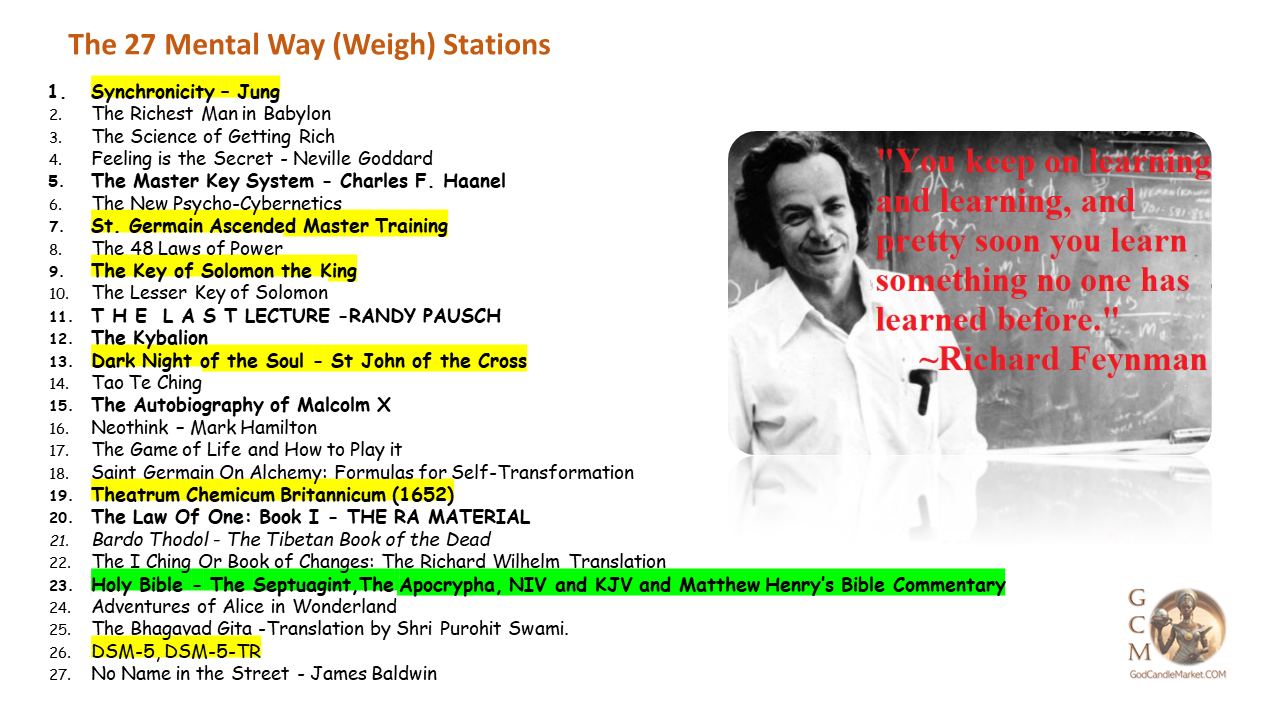
The Libraries of Becoming: Educating the Mythomatician


A Note on Allusions of the Grandeur
Tag:Reductionism