God and Math: Back Together at Last
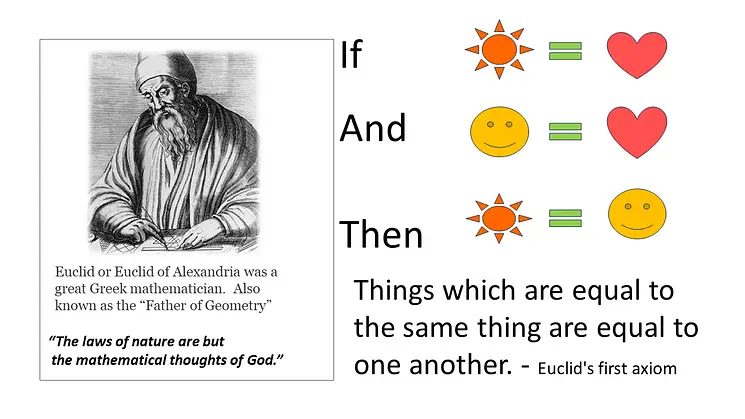
One question drifts across the ages: How do we connect God and Math?
The answer, whispered from the space between thoughts, is simple:
There is no separation to mend.
The divide is an illusion woven by human philosophy, by the slow erosion of memory and exposure.
In the early days, mathematics was branded heresy by the stewards of Christian thought.
The symbols of Zero and Infinity, portals to the vast and the void stood in tension with the sacred story of creation ex nihilo, the divine act of summoning something from nothing.
To gaze into the void was to trespass into the mind of God.
And so, the laws of the Church warned: some knowledge is too wild to seek.
Over time, necessity softened these walls.
Mathematics was grudgingly allowed into the sanctum , but ancient echoes still linger, shaping what we dare to question and what we forbid ourselves to know.
In today’s world, this tension appears as the clash between Religion and Science.
But make no mistake: Religion and Science are human inventions, scaffolds built to steady human minds against the chaos of existence.
Religion is not God. Science is not Math.
Religion uses the image of God just as science wields mathematics:
both are tools of pattern recognition, our fragile instruments for making sense of the unknown.
Since the beginning, humans have believed that if we could read the patterns of the past, we might predict, and perhaps prevent the perils of the future.
When I speak of God and Math, I am speaking not of constructs, but of the power that breathes through them the force that sanctifies both discovery and wonder.
I study not merely the created thing, but the logic and longing that brought it into being.
Most see mathematics as a servant to science, a tool for machines and matter.
But few realize:
The abstract reasoning that births mathematics is not bound to one domain.
It is a living current, flowing wherever mystery dares to unfold.