Run the Audit
In the framework of Mathematical Phenomenology and Hermeneutics (MPH), the “epistemic auditor” refers directly to the practice of Discernment. It acts as a critical safety filter and diagnostic protocol for the mind, designed to evaluate our perceptions and ensure we are interpreting our experiences correctly in an age of hyper-information.
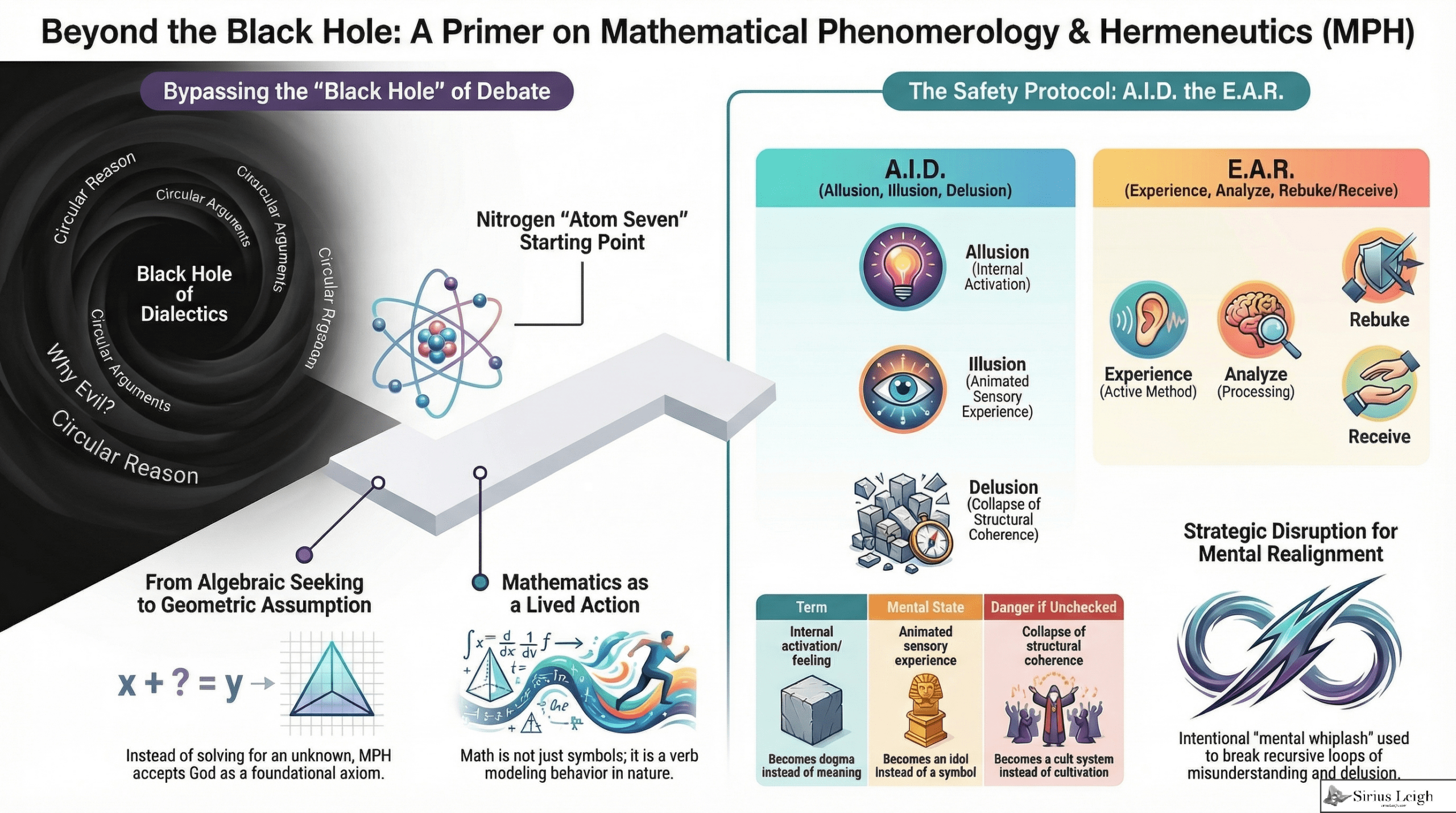
Specifically, the epistemic auditor determines whether a sensory image or presentation (an “Illusion”) is distorting a pure underlying message, or if it is accurately carrying its true meaning and frequency. Its primary role is to prevent the mind from slipping into Delusion—a dangerous state where a person skips awareness, completely identifies with a false image, and loses their ability to think critically or feel honestly without auditing the underlying data. When an illusion is properly audited by discernment, it functions as a helpful “parabolic vehicle” that conducts meaning, rather than acting as a recursive mental trap.
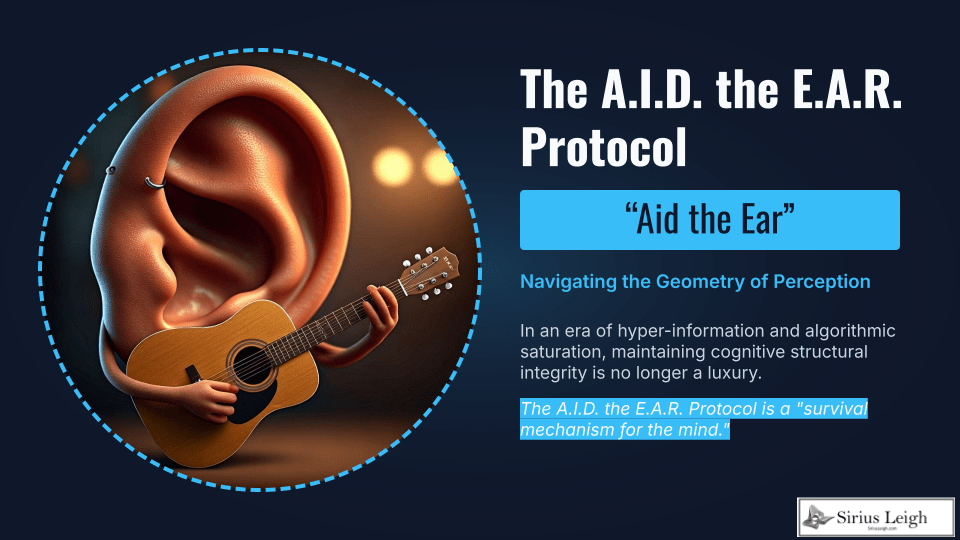
To use discernment as an epistemic auditor, the MPH framework provides a safety protocol known as “A.I.D. the E.A.R.”. This process involves evaluating the Allusion, Illusion, and Delusion of an experience by choosing to Experience the AllusionAn allusion (not to be confused with an illusion) is a literary device where a writer or artist makes an More, Analyze the Illusion, and then either Rebuke the Delusion or Receive Discernment.
Practically, engaging the epistemic auditor means asking yourself probing questions when evaluating a powerful experience, message, or image.