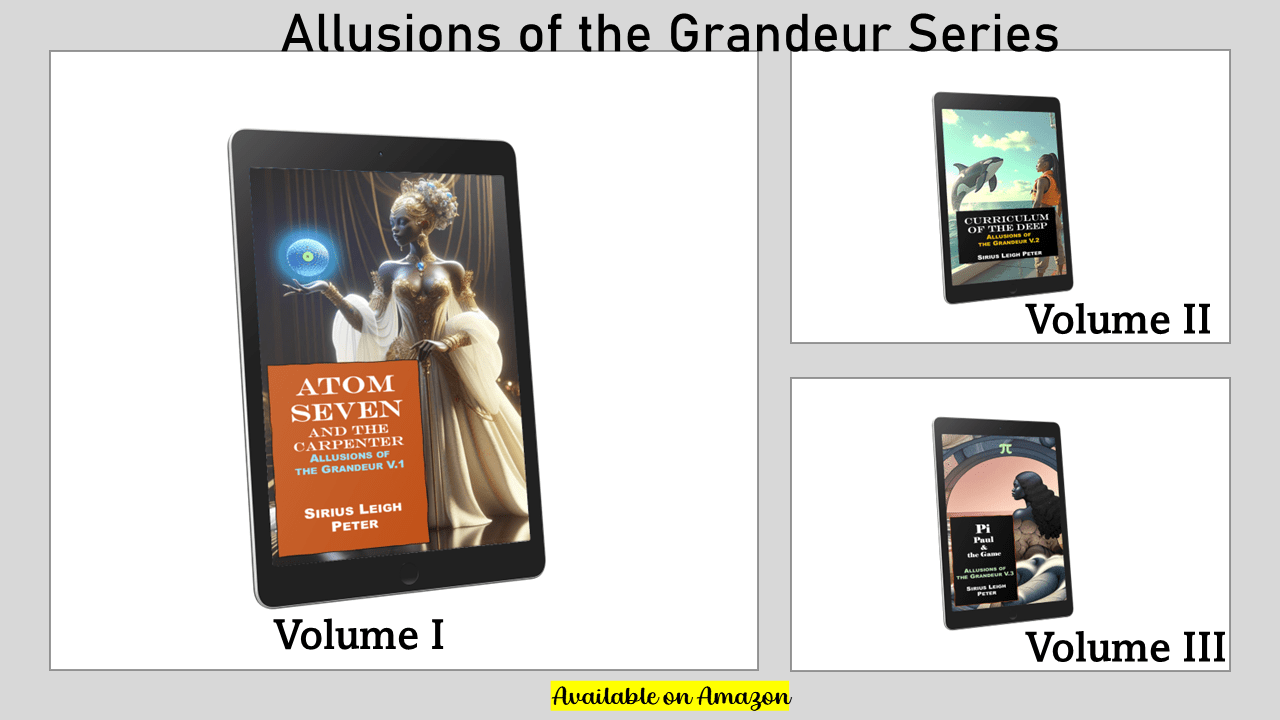
A Note on Allusions of the Grandeur
Why These Stories Are Built This Way
Most disagreements arrive already armed.
Apple versus orange. A side chosen. Ten toes down. The goal is defense, not discovery.
That is not what is happening in Allusions of the Grandeur.
These stories are not written to argue for the apple or against the orange. They are written at the level of the seed-bearing tree. Apples belong. Oranges belong. So do nuts, hybrids, misfits, and growths that refuse neat taxonomy. The category is larger than the argument.
Because of this, the work may appear, at first glance to loosen rigor or soften conviction. It does neither. What you are encountering is what happens when analytical discipline and lived faith are allowed to run free together, without one being forced to imitate the language of the other.
These are stories, yes. But they are not arbitrary.
They are structured narratives carrying the same constraints that govern the rest of my work. The difference is not seriousness, but mode. Where an academic paper argues, a story demonstrates. Where a theorem states, a character lives it. Where exposition explains, narrative tests coherence across time, pressure, contradiction, and consequence.
The seven woes that govern my thinking are not explained after the stories. They are embedded within them.
Each story refuses ideas that sound profound but cannot bear weight.
Nothing mystical survives unless it can function inside a lived situation. Abstractions are forced to make contact with human consequence.
Each story slows interpretation until comprehension catches up.
Meaning is not handed to the reader. It accrues. Motifs return before conclusions do. Understanding is earned through attention, not shortcuts.
Each story dissolves false binaries by refusing to stage them.
Rather than debating science versus faith, logic versus wonder, mind versus spirit, the stories operate one level deeper, showing the system that gives rise to both.
Each story resists easy labeling.
Genres blur on purpose. Allegory, autobiography, myth, and analysis. These distinctions break down because lived experience does not respect tidy shelves.
Each story exposes performance without integrity. Characters who posture collapse. Structures that look impressive but lack internal consistency fail under narrative pressure. What remains is what holds.
Each story protects imagination where it has historically been dismissed.
Particularly when imagination emerges from unlikely bodies, unlikely vocabularies, or unlikely authorities. The work insists that disciplined imagination is not indulgence, but it is survival.
Each story values completion over endless refinement.
They are offered as accounts, not prototypes. Testimony, not drafts hiding behind revision.
This insistence on structure does not come from theory alone. It comes from lived experience. These stories are not fancy book reports about grief, faith, mathematics, or meaning. They are records of what held when everything else failed.
My tongue happens to be mathematical. That is the language coherence speaks in for me. But as the apostle Paul reminds us in his letter to the Corinthians, a tongue that does not edify remains incomplete. Language is given to build, not to impress.
Allusions of the Grandeur is my edification.
That is why the stories behave the way they do. They are not decorative. They are functional. They carry load. They connect across volumes. They leave breadcrumbs for readers inclined to notice, while remaining generous to those who simply wish to walk the path once.
Nothing here is accidental.
This is not a series meant to be skimmed. It is a body of work meant to be lived with. Meaning accumulates. Patterns reveal themselves in time. Rereading is not redundancy; it is part of the design.
These stories are not arguments. They are structures.
And structure, when it is honest, tells the truth quietly, but unmistakably.